
You’re getting clicks, but your ad budget seems to disappear without producing enough leads. That’s one of the most frustrating parts of running paid advertising. Paid search strategy can help you reach people who are actively looking for your services, but only when your campaigns are properly targeted and monitored.
Wasted ad spend doesn’t always come from having a bad campaign. Sometimes it’s caused by irrelevant searches, weak targeting, poor landing pages, or simply spending money on clicks that never have a chance of becoming customers. The good news is that you don’t always need to increase your budget to get better results. Sometimes, you need to make better use of the budget you already have.
Start by Finding Where Your Budget Is Going
Before making changes to a PPC campaign, look at where the money is actually being spent. Which campaigns are generating clicks? Which keywords are getting impressions? Which ads are producing leads? More importantly, which parts of the campaign are spending money without producing meaningful results?
Looking only at clicks can give you the wrong picture. A keyword might bring in plenty of traffic but very few inquiries. Another keyword may receive fewer clicks but generate customers consistently. Your goal isn’t simply to get more traffic. It’s to understand which traffic has business value.
Stop Paying for Irrelevant Clicks
One of the easiest ways to waste PPC budget is by showing your ads to people who aren’t looking for what you offer. For example, if you provide professional web design services, you may not want your ads appearing for searches from people looking for free website builders, website design courses, or jobs in web development.
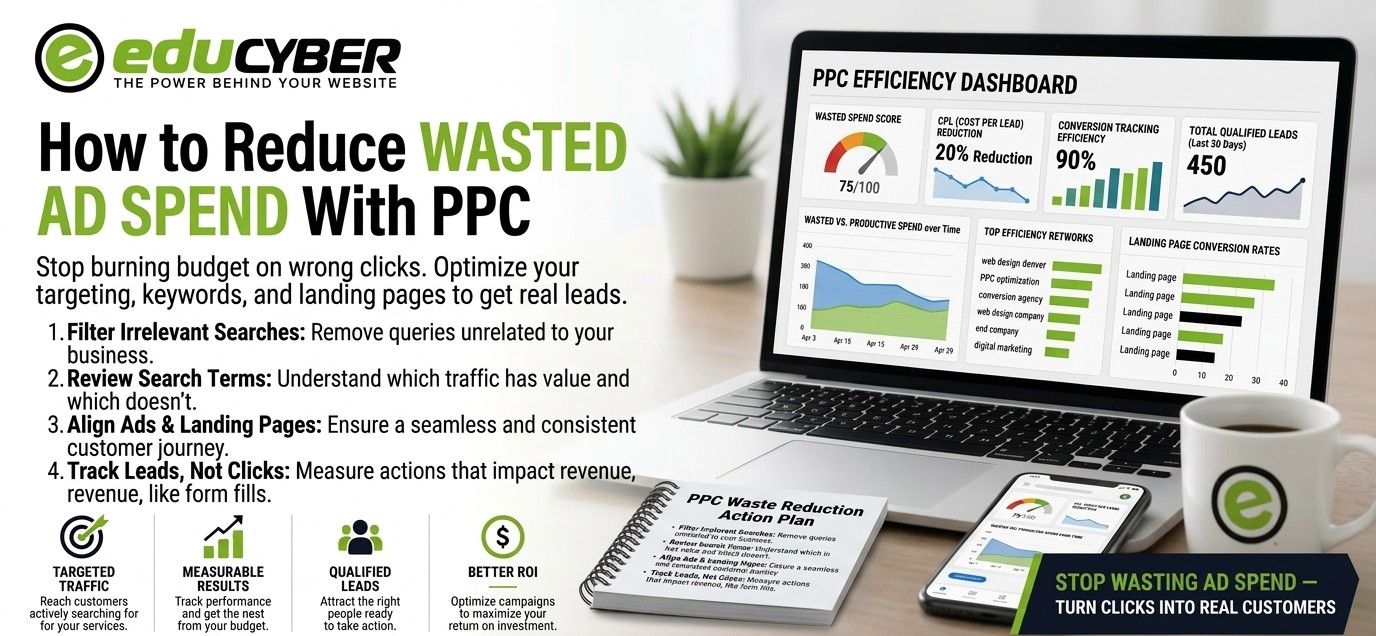
Reviewing search terms regularly can help you identify searches that don’t match your services. You can then adjust your targeting or add negative keywords where appropriate. This helps your budget stay focused on searches that are more relevant to your business.
Review Your Keywords and Search Terms
Choosing keywords isn’t a one-time task. Search behavior changes, and your ads can appear for variations of the keywords you’re targeting. That’s why reviewing actual search terms can reveal opportunities and problems that aren’t obvious from your original keyword list.
Look for patterns. Are people searching for services you don’t provide? Are they using informational searches when you’re trying to reach customers who are ready to buy? Are certain keywords consistently generating leads? The answers can help you decide where to reduce spending and where to put more attention.
Make Sure Your Ads Match the Landing Page
Getting the right person to click your ad is only the first step. If the ad promises one thing but the landing page talks about something completely different, you may lose the visitor immediately. The same can happen when a landing page is difficult to navigate, takes too long to load, or doesn’t make the next step clear.
Your ad, keyword, and landing page should work together. A visitor should quickly understand that they have reached the right place, what you offer, and what they should do next.
Strong web design isn’t just about appearance. When a website or landing page is built around the customer’s next step, your paid traffic has a better chance of turning into an inquiry.
Don't Ignore Campaigns That Aren't Converting
Not every campaign will perform the same way. Some may generate leads consistently, while others continue spending without producing meaningful results. That doesn’t necessarily mean you should immediately shut everything down, but it does mean those campaigns deserve a closer look.
Check the keywords, ads, targeting, landing page, and conversion data before deciding what needs to change. Sometimes a small adjustment can improve performance. Other times, continuing to spend on a campaign simply doesn’t make sense. The important thing is to make decisions based on actual performance rather than assumptions.
Track Leads, Not Just Clicks
Clicks can look impressive in a report, but they don’t pay the bills. If your goal is to generate leads, your campaigns need to be measured around actions that matter to the business. That could include form submissions, phone calls, quote requests, purchases, or other meaningful conversions.
This gives you a much clearer picture of where your advertising budget is working. It also helps you identify a common PPC problem: a campaign may have a good click-through rate but still produce very few customers. That’s why conversion optimization should be considered alongside your paid advertising. Getting people to your website is important, but getting them to take action is what turns traffic into business.
Keep Testing and Adjusting Your Campaigns
PPC campaigns shouldn’t be something you set up once and forget. Ads, keywords, landing pages, audiences, and budgets may all need adjustments as you collect more data. If you’re considering PPC as part of your overall marketing strategy, you can also explore how paid advertising can help a business grow.
The goal isn’t to make random changes every few days. It’s to use the information from your campaigns to make smarter decisions over time. Even small improvements can matter when you’re spending money on every click.
How EduCyber Helps Reduce Wasted Ad Spend
Reducing wasted ad spend isn’t just about lowering your advertising budget. It’s about making sure more of your budget goes toward the right audience, the right searches, and the right customer experience. EduCyber helps businesses connect paid search with their website, landing pages, conversion strategy, and broader digital marketing efforts.
The focus is on generating meaningful business results rather than simply increasing traffic. When your advertising and website work together, you can make better use of the visitors you’re already paying to reach.
Final Thoughts
If your PPC campaigns are spending money without producing enough results, don’t assume the answer is simply to spend more. Start by looking at where your budget is going. Remove irrelevant traffic, review your search terms, improve the connection between your ads and landing pages, and track the conversions that actually matter.
Better PPC performance starts with making every part of the campaign work toward the same goal: turning the right clicks into real business opportunities.