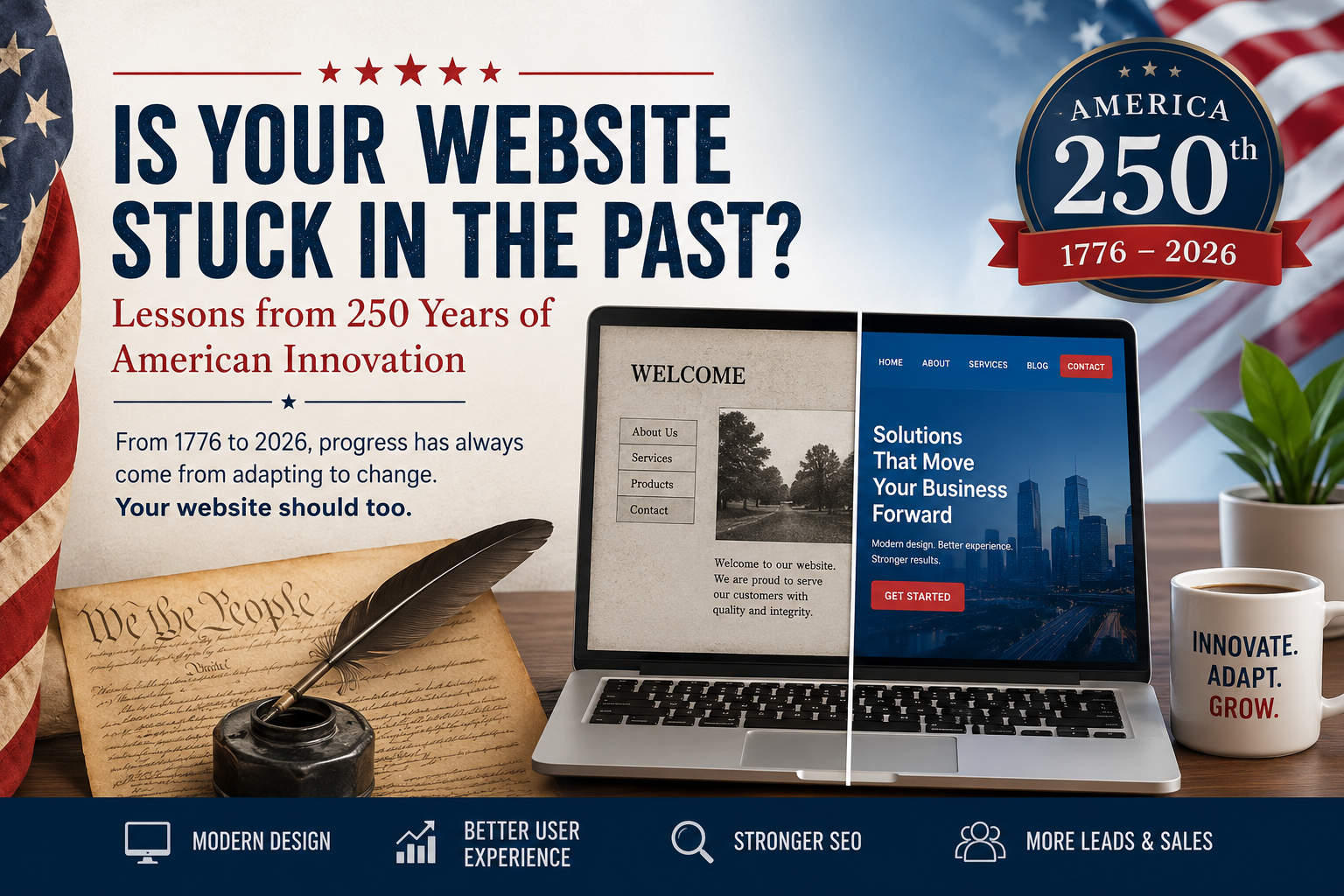
As America celebrates its 250th birthday in 2026, we’re reminded that our nation’s history is really a story of innovation.
From the printing press to the telegraph, from automobiles to the internet, America has continually embraced new ways of communicating, connecting, and doing business. The companies that succeeded weren’t always the biggest or oldest. More often than not, they were the businesses willing to adapt.
The same is true today.
Your website is often the first interaction potential customers have with your business. If your website hasn’t kept pace with changing technology and customer expectations, it may be costing you opportunities without you even realizing it.
As we reflect on 250 years of American progress, it’s worth asking: Is your website helping your business move forward, or is it stuck in the past?
America's Success Has Always Been Built on Innovation
One of the defining characteristics of America has been the willingness to embrace change. Businesses that adopted new technologies gained advantages over their competitors. Those that ignored emerging trends often found themselves struggling to keep up.
Imagine trying to run a business today using the same tools available in 1976. You wouldn’t rely solely on printed directories instead of search engines. You wouldn’t communicate exclusively through mailed letters instead of email.
Yet many businesses are still relying on websites designed for an internet that no longer exists.
Customer expectations have changed dramatically over the past decade. Visitors expect websites to be fast, mobile-friendly, easy to navigate, and secure. When those expectations aren’t met, they often move on to a competitor.
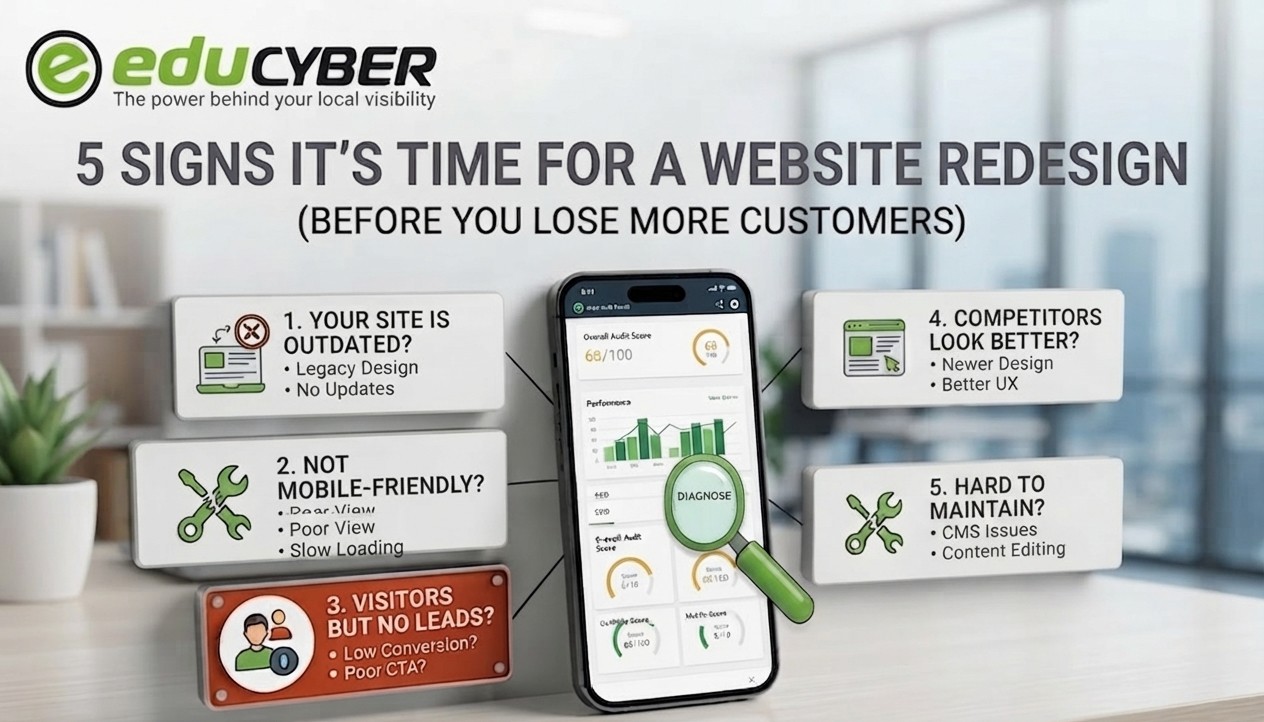
Five Signs Your Website May Be Stuck in the Past
1. It Doesn’t Work Well on Mobile Devices
More than half of all website traffic now comes from smartphones and tablets. If visitors have to pinch, zoom, or struggle to click buttons on your site, they’re likely to leave.
A mobile-friendly website isn’t a luxury anymore. It’s a necessity.
2. It Takes Too Long to Load
We’ve all experienced it. You click on a website, wait a few seconds, and then give up.
Your visitors do the same thing.
Website speed affects not only the user experience but also your visibility in search engines. A slow website can hurt both traffic and conversions.
3. The Design Feels Outdated
Your website doesn’t need flashy animations or the latest design trend, but it should look current and professional.
Visitors often make judgments about a business within seconds. An outdated website can unintentionally signal that the business itself is outdated.
Fair or not, first impressions matter.
4. Visitors Can’t Easily Find Information
Good website design isn’t just about appearance. It’s about helping people accomplish what they came to do.
If visitors struggle to find your phone number, services, pricing information, or contact forms, they’ll become frustrated and leave.
Simple navigation often outperforms complicated but lovely design.
5. You Haven’t Updated It in Years
A website shouldn’t be treated like a brochure that gets printed once and forgotten.
Your business evolves. Your website should evolve with it.
What 250 Years of Progress Can Teach Us About Website Design
Innovation Is an Ongoing Process
America didn’t become a leader in innovation through one breakthrough. Progress happened through continuous improvement over generations.
The same principle applies to your website.
Many business owners assume a website redesign has to be a massive project. In reality, meaningful improvements often happen through smaller updates over time: improving page speed, updating content, enhancing mobile usability, strengthening calls-to-action, improving accessibility, and optimizing for search engines.
Small improvements add up.
Focus on Solving Problems
The most successful innovations throughout American history solved real problems.
The same is true for website design.
The goal isn’t to have the fanciest website in your industry. The goal is to create a website that helps visitors quickly find answers, build trust, and take action.
Good design serves your audience first.
Customer Expectations Will Continue to Change
The internet looks very different today than it did ten years ago.
Artificial intelligence, voice search, accessibility standards, cybersecurity concerns, and changing search engine algorithms are already shaping the future of websites.
Businesses that continually adapt will be better positioned for whatever comes next.
Is It Time for a Website Refresh?
Not every business needs a complete redesign. Sometimes a few strategic updates can significantly improve performance.
Ask yourself these questions:
- Is my website mobile-friendly?
- Does it load quickly?
- Is it easy to navigate?
- Does it accurately reflect my current business?
- Is it generating leads and inquiries?
- Does it support my SEO efforts?
- Do visitors trust what they see when they land on the site?
If you answered “no” to several of these questions, it may be time to evaluate whether your website is helping or hurting your growth.
Why Is Personalization Essential for Better Results?
Generic emails rarely perform well. People are far more likely to engage with content that feels relevant to their interests and needs. Personalization helps create that relevance.
Businesses can personalize emails by:
- Using subscriber names
- Segmenting audiences based on interests
- Recommending relevant content
- Sending behavior-based messages
- Delivering location-specific information
Modern email marketing platforms make personalization easier than ever. Effective audience segmentation helps businesses deliver more relevant content. A skilled email marketing service provider can help create targeted campaigns that improve open rates, click-through rates, and conversions.
How Does Marketing Automation Improve Lead Generation?
Following up with every lead manually sounds great. Unfortunately, it’s rarely practical. Most businesses are focused on serving customers, managing operations, and handling day-to-day responsibilities. Marketing automation helps maintain consistent communication without adding more work to your schedule.
Some common automated campaigns include:
Welcome Sequences
Automatically sent when someone joins your email list.
Lead Nurturing Campaigns
A series of emails designed to educate and engage prospects over time.
Re-Engagement Campaigns
Used to reconnect with subscribers who have stopped interacting with your emails.
Follow-Up Emails
Triggered after actions such as form submissions, downloads, consultations, or purchases.
The best email marketing service solutions use automation to keep leads engaged while creating a better overall customer experience.
How Do Landing Pages and Emails Work Together?
Landing pages and email campaigns are most effective when they support each other. Think of email as the tool that drives visitors to a specific action. The landing page is where that action happens.
For example:
- An email promotes a free guide.
- The subscriber clicks the link.
- They arrive on a dedicated landing page.
- They complete a form.
- The business captures the lead.
- Automated emails continue the nurturing process.
This creates a smooth and consistent journey from initial interest to qualified lead.
How Can Companies Measure the Success of Their Email Marketing Efforts?
One of the major benefits of email marketing is the ability to measure it. Companies can analyze and improve their campaigns based on factual information instead of guesswork.
Here are some important metrics:
Open Rate
Represents the number of people who opened your emails.
Click-Through Rate
Reveals how many subscribers clicked on links in your emails.
Conversion Rate
Determines the number of people who performed the desired action.
Bounce Rate
Demonstrates the number of emails that were not delivered.
Subscriber Growth
Measures the growth rate of your email list.
An experienced email marketing company constantly tracks all these metrics and improves campaign results accordingly.
What Role Does Content Play in Email Lead Generation?
Content is what gives people a reason to stay engaged. Without valuable content, even the most sophisticated email campaign will struggle to produce results.
Businesses can provide value through:
- Industry insights
- Educational blogs
- How-to guides
- Case studies
- Company updates
- Success stories
- Special offers
The goal isn’t simply to send emails. The goal is to send emails people actually want to open. When businesses consistently provide useful information, subscribers are more likely to trust the brand and take action when they’re ready.
Frequently Asked Questions (FAQs)
How often should a business redesign its website?
Most businesses should evaluate their website every three to five years. Technology, design standards, and customer expectations change quickly, and regular updates help ensure your website remains effective.
Will redesigning my website hurt my SEO?
Not if it’s done correctly. A well-planned redesign can actually improve SEO performance by enhancing site structure, page speed, mobile usability, and content quality. The key is preserving important URLs and implementing proper redirects when needed.
What's the biggest website mistake small businesses make?
One of the most common mistakes is treating a website as a one-time project. Successful websites require ongoing updates, maintenance, content improvements, and optimization to remain competitive.
How do I know if my website is generating leads?
You should be tracking form submissions, phone calls, email inquiries, and website traffic through analytics tools. Without tracking, it’s difficult to determine whether your website is delivering a return on investment.
Is mobile responsiveness really that important?
Absolutely. Most users now browse the internet on mobile devices. A poor mobile experience can result in lost visitors, lower search rankings, and fewer conversions.
What's more important: website design or SEO?
Both matter. Great design helps convert visitors into customers, while SEO helps potential customers find your website in the first place. The most effective websites balance both user experience and search visibility.
Looking Ahead
As America celebrates 250 years of innovation, resilience, and progress, businesses have an opportunity to embrace those same principles.
Your website doesn’t need to be revolutionary. It simply needs to evolve alongside your customers, your industry, and the technology that connects people to your business.
The companies that have thrived throughout American history are the ones that adapted when the world changed around them.
The question is: Is your website ready for the next chapter?