A visitor clicks your ad, reaches your website, and leaves without contacting you. The problem may not be your advertising. It could be the page they landed on. Your homepage and service pages have a lot to explain. A landing page has a much narrower job: get the visitor to take one specific action. So which one should you use for lead generation? It depends on where the visitor comes from, what they are looking for, and how ready they are to take the next step.
Your Website Pages Have More to Explain
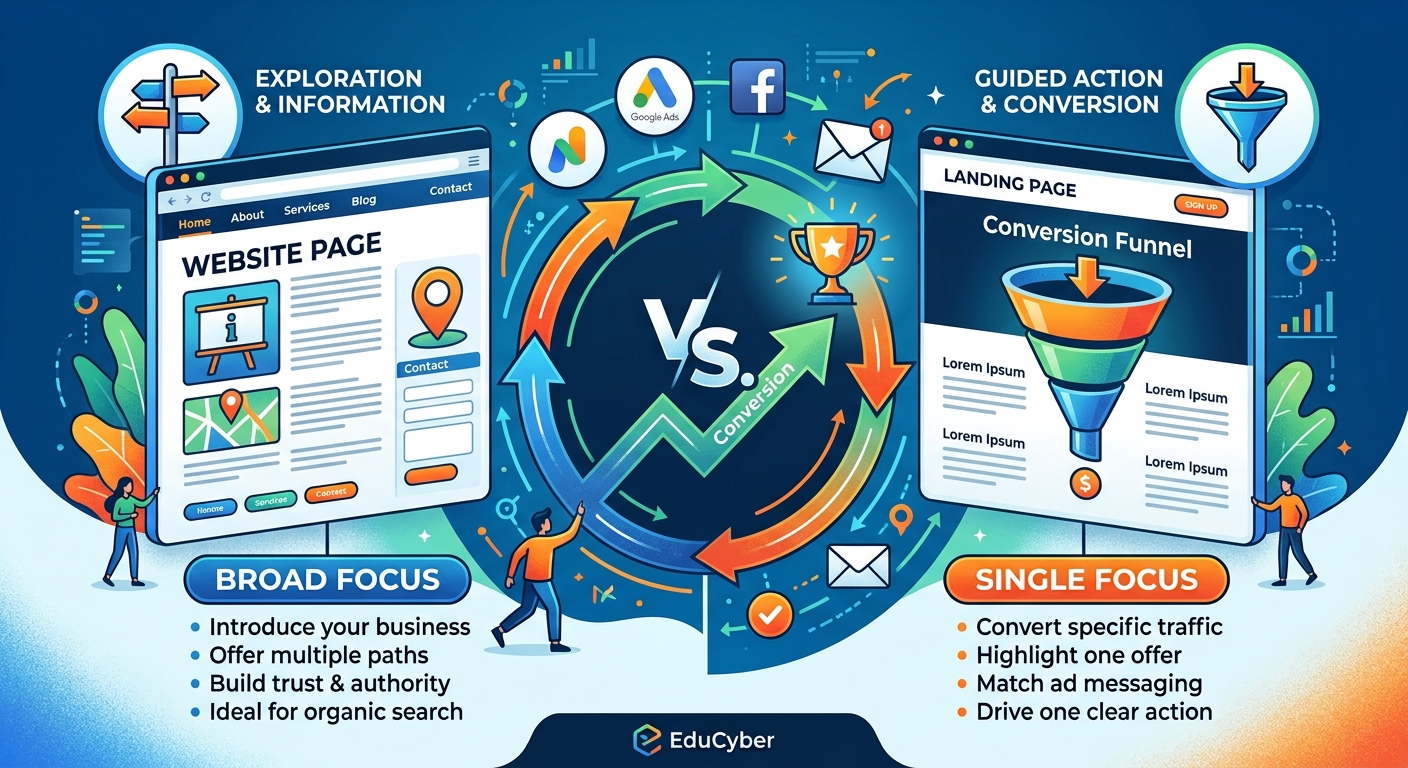
Your regular website pages are designed to help people understand your business. Your homepage introduces who you are. Service pages explain what you offer. Your about page builds trust, while your blog can answer questions customers have before making a decision.
That’s important because not every visitor is ready to contact you immediately. Someone may want to compare services, read about your experience, look at your work, or simply understand what your business does. A website gives them room to do that. But that flexibility can become a problem when you’re trying to get someone to complete one specific action.
Landing Pages Keep the Conversation Focused
A landing page is built around a particular campaign, service, audience, or offer. Imagine someone clicks a Google Ad about website redesign. Instead of sending them to your homepage, you send them to a page focused specifically on website redesign. They immediately see information related to what they searched for. The message matches the advertisement, the benefits are clear, and the next step is easy to find.
That’s the biggest difference. A website page helps visitors explore. A landing page helps guide them toward one action.
Don't Make Visitors Figure Out What to Do
This is where many businesses lose potential leads. A visitor shouldn’t have to search through your website to find your phone number, contact form, or the service they were interested in. Your page should answer the important questions quickly:
- What do you offer?
- How can it help me?
- Why should I trust you?
- What should I do next?
Clear messaging and a strong call to action can make the difference between someone continuing through your website and someone contacting your business. This is especially important for paid traffic, where you’re paying for every click.
A Landing Page Still Needs to Build Trust
Focused doesn’t mean empty. A good landing page should provide enough information for someone to feel comfortable taking the next step. Testimonials, reviews, case studies, relevant experience, clear benefits, and straightforward service information can all help.
The design matters too. The page should load quickly, work properly on mobile devices, and make the important information easy to find. Good landing page design services aren’t simply about making a page look attractive. They’re about creating an experience that supports the campaign and makes conversion easier.
What About SEO?
Not every keyword needs its own landing page. Your main website pages can target broader services and topics, while landing pages can support specific campaigns or audiences.
The important thing is intent. If two searches have completely different expectations, separate pages may make sense. If they’re essentially asking for the same thing, creating multiple pages just to target slightly different keyword variations probably won’t help. The goal should always be useful content first.
The Page Isn't the Whole Strategy
A landing page can help improve lead generation, but it can’t fix everything. If your advertisement is targeting the wrong audience, the offer isn’t compelling, or visitors don’t trust the business, changing the page alone won’t solve the problem.
That’s why landing pages work best as part of a broader digital marketing strategy. Your advertising brings qualified visitors in. Your website or landing page gives them the information they need. Conversion optimization helps identify where visitors are dropping off and what can be improved.
How EduCyber Approaches Lead Generation
At EduCyber, we don’t believe every business needs a separate landing page for every campaign. Sometimes an existing service page is already the right destination. Other times, a focused landing page can create a clearer path for a specific audience.
The decision should come from your goals, traffic, audience, and conversion data—not simply from following a trend. Your website should support your marketing rather than make your marketing work harder.
Final Thoughts
Landing pages and website pages aren’t competing solutions. They simply serve different purposes. Your website gives visitors room to learn about your business. A landing page gives a specific visitor a focused path toward one action.
If you’re spending money to bring people to your website, it’s worth asking a simple question:
Are you giving them a clear reason and an easy way to take the next step?
If the answer is no, the problem may not be getting more traffic. It may be what happens after visitors arrive.