You’ve invested in Google Ads because you want more leads, more phone calls, and more customers. The clicks are coming in, your budget is being spent, but the conversions just aren’t happening.
Sound familiar?
Many businesses assume that if Google Ads aren’t generating results, the platform simply doesn’t work for their industry. In reality, Google Ads can be one of the most effective marketing channels available — when campaigns are built and managed correctly.
The truth is that most underperforming campaigns suffer from a handful of common issues. The good news? They’re usually fixable.
Let’s look at four of the biggest reasons Google Ads campaigns fail to convert and what you can do to improve your results.
1. You're Targeting the Wrong Keywords
Google Ads begins and ends with keyword strategy. If you’re targeting the wrong search terms, you’re putting your ads in front of people who were never likely to become customers in the first place.
One of the most common mistakes businesses make is focusing solely on search volume. A keyword that gets thousands of searches per month may look attractive, but if those searches aren’t coming from people who are ready to buy, you’ll end up paying for clicks that go nowhere.
For example, someone searching for “how to repair a leaking pipe” is probably looking for DIY advice. Someone searching for “emergency plumber near me” has a much higher likelihood of becoming a paying customer.
Broad keyword targeting can create similar problems. While broad-match keywords can generate significant traffic, they often trigger ads for searches that are only loosely related to your services.
Signs Your Keyword Strategy Needs Work
- High click volume but few leads
- Rising advertising costs with little return
- Search terms that don’t relate directly to your services
- Large differences between traffic and conversions
How to Fix It
Start with thorough keyword research. Focus on keywords that indicate buying intent rather than general interest. Long-tail keywords often perform better because they target users who know exactly what they’re looking for.
It’s also important to maintain a strong negative keyword list. Negative keywords prevent your ads from appearing for irrelevant searches, helping you eliminate wasted spend and improve campaign efficiency.
A well-structured campaign groups similar keywords together and matches them with highly relevant ads. The more closely aligned your keywords, ads, and landing pages are, the better your chances of converting visitors into customers.
2. Your Ad Copy Isn't Compelling Enough
It is important to note that lead generation web design becomes vital as conventional methods such as cold calling are becoming increasingly ineffective; moreover, the internet has become the platform where everything happens instantly and visitors expect something tangible. Consumers spend ample time researching a product on the Internet prior to contacting a business or contractor; thus, a company’s website becomes your salesman 24 hours a day.
As you can see from the beginning of this article, lead generation web design provides a solution in terms of generating a steady flow of income, as the conversion process from site traffic to leads works effectively only with proper web design. The buyer in today’s market is not patient, and he or she expects fast loading of sites, mobile friendly design, and an instant solution to a problem.
Lead generation web design unites SEO, content creation, social proof, paid advertising, and other channels that contribute to marketing success.
Common Ad Copy Mistakes
- Generic headlines
- No clear call-to-action
- Focusing on features instead of benefits
- Failing to address customer pain points
- Not differentiating from competitors
How to Fix It
Your ads should answer one important question: Why should someone choose you?
Highlight your unique selling points. Mention years of experience, fast response times, certifications, warranties, or other factors that make your business stand out.
Strong calls-to-action are equally important. Tell users exactly what you want them to do next:
- Request a Quote
- Schedule a Consultation
- Call Today
- Book Online
You should also take advantage of Google Ad Extensions, which allow you to add additional information such as phone numbers, service categories, locations, and links to specific pages on your website. The more relevant and helpful your ad appears, the more likely users are to click.
3. Your Landing Page Is Costing You Leads
One of the biggest mistakes businesses make is assuming that getting the click is the hard part.
In reality, getting the click is only half the battle.
Once someone arrives on your website, the landing page must convince them to take action. If it doesn’t, your advertising dollars are essentially wasted.
A common scenario looks like this: a user searches for “roof repair in Denver,” clicks your ad, and instead of landing on a dedicated roof repair page, they arrive on your homepage and are forced to hunt for the information they need. Many visitors won’t bother — they’ll leave and visit a competitor’s website instead.
Common Landing Page Problems
- Slow loading speeds
- Poor mobile experience
- Too much information
- Weak or confusing calls-to-action
- Forms that ask for too much information
- Messaging that doesn’t match the ad
What High-Converting Landing Pages Do Well
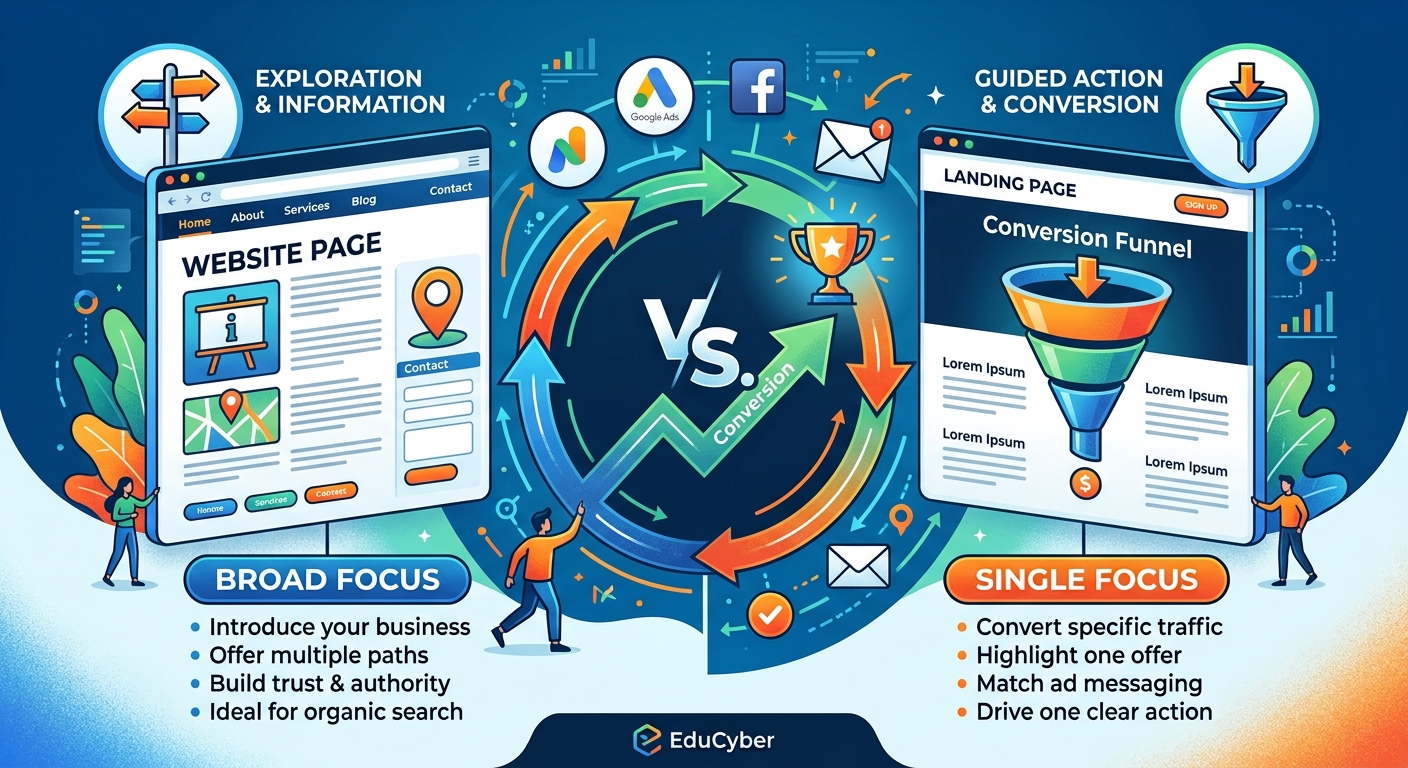
Effective landing pages focus on a single objective. They include:
- A clear headline
- Strong supporting copy
- Trust-building elements such as reviews or testimonials
- Easy-to-find contact information
- A simple form or conversion action
- Fast page load times
The messaging on the page should also align with the ad that brought the visitor there. If your ad promotes emergency plumbing services, the landing page should immediately reinforce that message rather than introducing unrelated information.
A simple test is to ask yourself: Can a visitor understand what we offer and what action to take within five seconds? If the answer is no, the page likely needs improvement.
4. You're Not Tracking Conversions Correctly
You can’t improve what you don’t measure.
Surprisingly, many businesses spend hundreds or thousands of dollars per month on Google Ads without properly tracking conversions. They know how many clicks they’re getting but have no idea which keywords, ads, or campaigns are actually generating leads. Without conversion tracking, you’re essentially flying blind.
What Should Be Tracked?
Depending on your business, important conversions may include:
- Contact form submissions
- Phone calls
- Appointment bookings
- Online purchases
- Quote requests
- Newsletter signups
Why Conversion Tracking Matters
Accurate tracking allows you to identify:
- Which keywords generate leads
- Which ads perform best
- Which landing pages convert visitors
- Which campaigns deserve more budget
Without this information, it’s impossible to make informed optimization decisions. Many businesses continue investing in campaigns that appear successful because they’re generating clicks, when in reality those clicks aren’t producing revenue. Proper conversion tracking helps shift the focus from traffic to actual business outcomes.
Google Ads Is Not a "Set It and Forget It" Platform
One of the biggest misconceptions about Google Ads is that campaigns can be launched and left alone. Successful campaigns require ongoing management and optimization.
Markets change. Competitors adjust their strategies. Search behavior evolves. Google updates its platform regularly. The campaigns that consistently generate results are the ones that are actively monitored and refined.
This includes:
- Reviewing keyword performance
- Adjusting bids
- Managing budgets
- Adding negative keywords
- Testing new ad copy
- Improving landing pages
- Monitoring conversion rates
- Analyzing competitor activity
Even small adjustments can have a significant impact on overall campaign performance.
Final Thoughts
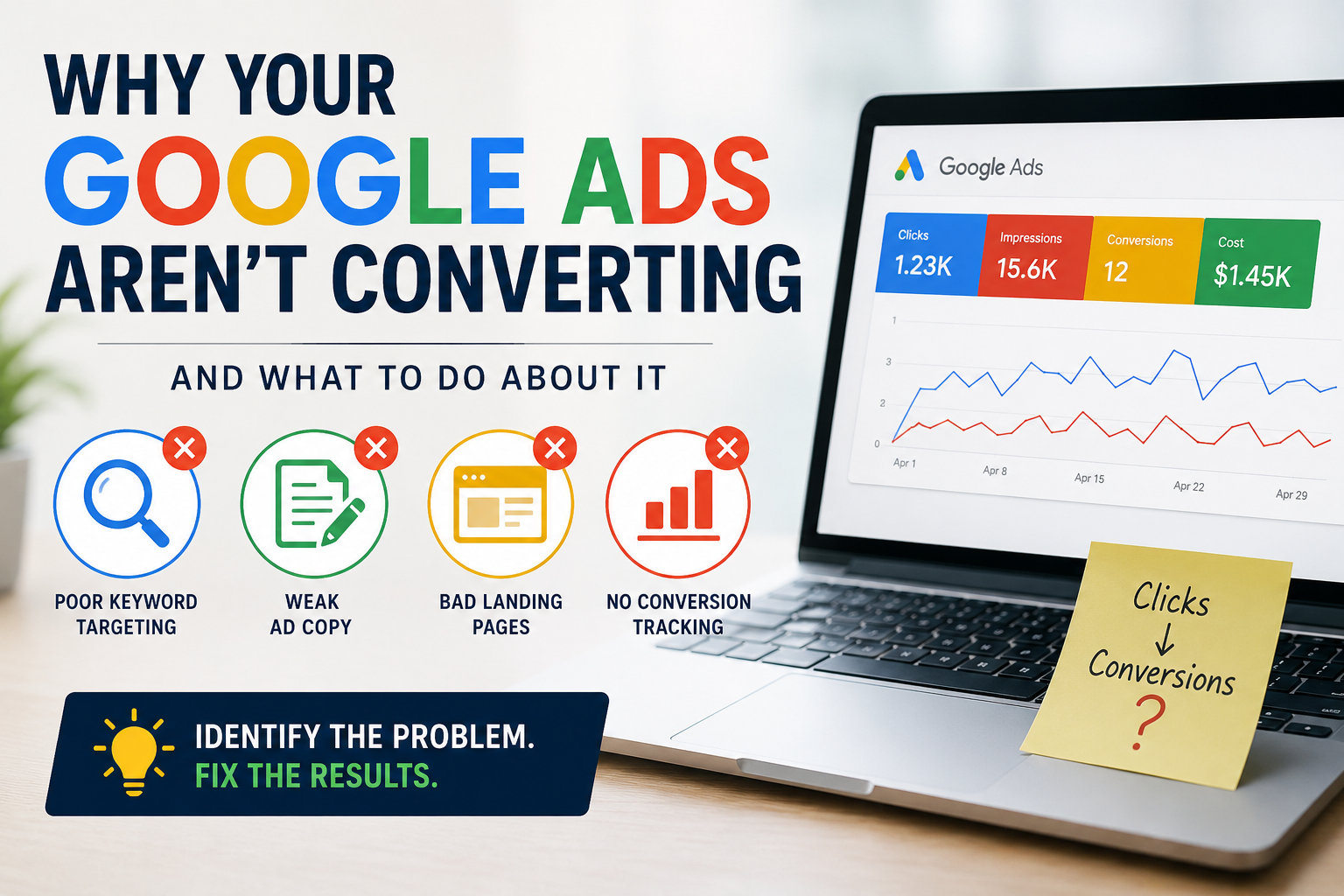
If your Google Ads aren’t converting, don’t assume the platform is the problem. In most cases, the issue comes down to one or more of four areas:
- Poor keyword targeting
- Weak ad copy
- Ineffective landing pages
- Missing or inaccurate conversion tracking
Addressing these issues can dramatically improve lead quality, increase conversion rates, and generate a stronger return on your advertising investment.
Google Ads can be an incredibly powerful growth tool — but only when every part of the campaign is working together.
If you’re spending money on PPC and not seeing the results you expect, it may be time for a professional review of your account, targeting strategy, and conversion process. Sometimes a few strategic adjustments are all it takes to turn clicks into customers.